



Material Handling in Modern Warehousing: Why Manual Solutions Still Matter in an Automated World
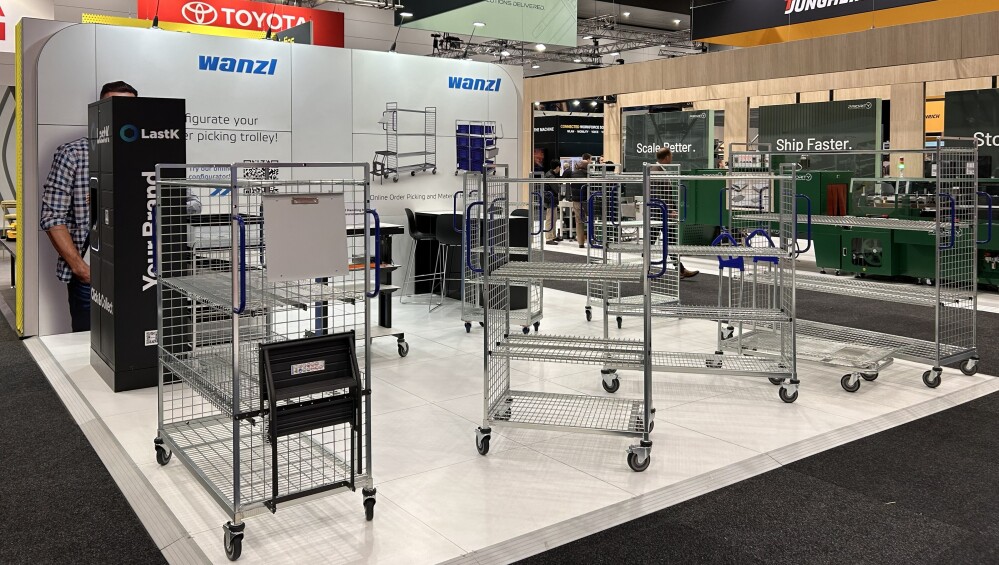
Wanzl Australia recently exhibited at CeMAT Australia, standing alongside many of the biggest names in warehouse automation, robotics, autonomous mobile robots (AMRs), and distribution centre technologies. Walking the exhibition floor, it was clear that automation continues to transform the logistics landscape and is playing an increasingly important role in improving productivity and efficiency. However, one observation stood out: despite the advances in automation, manual material handling solutions remain an essential part of warehouse operations. This raises an important question—if automation is growing so rapidly, what role does manual material handling still play? The answer highlights why solutions such as order picking trolleys, roll containers, and transport equipment continue to be critical in modern distribution centres.
What is Material Handling?
Material handling refers to the movement, storage, control, and protection of goods throughout manufacturing, warehousing, distribution, and retail operations. It encompasses a wide range of equipment and processes used to transport products safely and efficiently from one point to another.
Common material handling solutions include:
- Order picking trolleys
- Platform carts
- Roll cages
- Pallet handling equipment
- Storage systems
- Picking and replenishment tools
The primary objective of material handling is simple: move products efficiently while minimising labour, reducing damage, and maximising productivity.
Where Does Material Handling Fit Within Warehousing and Distribution Centres?
Material handling plays a critical role throughout the entire warehouse workflow. From receiving inbound goods to shipping customer orders, products must move through multiple stages before reaching their final destination.
Typical warehouse processes include:
- Receiving and unloading
- Put-away and storage
- Inventory replenishment
- Order picking
- Packing and consolidation
- Dispatch and shipping
While automation can streamline many of these activities, few facilities operate with 100% automation. Warehouses frequently encounter exceptions, variable order profiles, seasonal fluctuations, and product ranges that require a degree of human intervention.
This is particularly true in order picking operations. Automated systems may transport products to a picking zone, but operators often still need to pick individual items, consolidate orders, manage returns, or move products between workstations. In these situations, manual material handling equipment remains an essential part of the operational process.
The Reality: Automation and Manual Material Handling Work Together
Rather than replacing manual material handling entirely, automation is increasingly complementing it.
Many organisations discover that the cost and complexity of automating every process step is difficult to justify. As a result, a hybrid model emerges where automation handles repetitive, high-volume tasks while manual solutions provide flexibility and adaptability.
Order picking trolleys are a perfect example. Even within highly automated distribution centres, operators use picking trolleys to:
- Complete multi-order picking runs
- Handle exception orders
- Process returns
- Support replenishment activities
- Move products within non-automated zones
This combination allows businesses to gain the efficiency benefits of automation without sacrificing operational agility.
Wanzl Material Handling Solutions
As a global leader in logistics and retail equipment, Wanzl provides a comprehensive range of material handling products designed to optimise warehouse and distribution centre performance.
Wanzl’s solutions include:
- Ergonomic order picking trolleys
- Roll containers and roll cages
- Platform trucks
- Warehouse transport equipment
- Customised logistics solutions
Wanzl products are engineered to improve operator efficiency, reduce physical strain, and support safe product movement across the supply chain. Their modular designs allow businesses to adapt equipment to varying operational requirements, making them particularly valuable in modern hybrid warehouses where both automation and manual handling coexist.
Conclusion
Despite the growth of warehouse automation, manual material handling remains a vital component of efficient logistics operations. Automation excels at repetitive and predictable tasks, but human-supported processes continue to play an important role in handling exceptions, order picking, and operational flexibility.
As warehouses evolve towards increasingly sophisticated automation strategies, the most successful facilities will be those that integrate both technologies and manual handling equipment effectively. The future of warehousing is not automation versus manual handling—it is the intelligent combination of both. With innovative solutions such as Wanzl order picking trolleys, roll containers, and transport equipment, businesses can create productive, flexible, and future-ready distribution operations.